Source Insole Moulding Machine for clinics, physiotherapy, and shoe stores
Compare 30 Insole Moulding Machine listings from verified Chinese suppliers. Buyers can evaluate specifications like power, dimensions, and certifications to find suitable equipment for foot clinics, physiotherapy centers, and shoe stores.
Key considerations
Products List
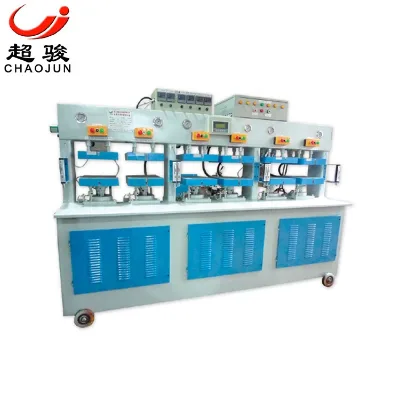
$1000.00 - $10000.00
MOQ: 1 Minimum


Vulcanizing Machine Moulding Machine for Rubber Labor Shoe for Safety Shoe Making
$3000.00 - $10000.00
MOQ: 1 Pieces


Fully Automatic Sole Shaping Machine Insole Moulding Shoe Making Machine
$37000.00 - $41500.00
MOQ: 1 Set


Pressing Machine for Insole Midsole Moulding Machinery Shoe Making Machine
$37000.00 - $41500.00
MOQ: 1 Set


Comprehensive Sourcing Guide
Insole Moulding Machine Sourcing Guide
Selecting the right Insole Moulding Machine requires a clear understanding of the specific manufacturing processes involved, from sole formation to final assembly. Buyers must distinguish between equipment designed for biological force analysis and machinery dedicated to the physical production of footwear components. The market offers a diverse range of solutions, including foot pressure biological force line detectors for clinic applications and heavy-duty units for shoemaking lines. Understanding these distinctions is critical to aligning procurement with your operational goals, whether you are outfitting a physiotherapy center or a high-volume footwear factory.
This guide provides evidence-based procurement advice for sourcing insole moulding and related footwear manufacturing equipment. It focuses on verifying technical specifications, ensuring compliance with safety standards, and evaluating commercial terms. By adhering to the facts provided and trusted industry knowledge, buyers can make informed decisions that minimize risk and maximize operational efficiency. The following sections detail the key considerations for evaluating suppliers, assessing machine capabilities, and establishing long-term procurement strategies.
Product Scope and Observed Listing Signals
The observed product landscape reveals a significant divergence in machine types, ranging from diagnostic tools to industrial manufacturing units. Listings indicate the presence of Foot Pressure Biological Force Line Detectors, which are categorized under orthopedics and feature LCD displays and multi-language support. These units are typically intended for foot clinics, physiotherapy centers, or shoe stores to analyze gait and pressure distribution. In contrast, other listings describe machines with functions explicitly labeled as "Shoemaking Line" or "Making Sole," which are designed for the physical production of insoles using materials such as artificial leather, rubber, and genuine leather. Buyers must carefully distinguish between diagnostic equipment and production machinery to avoid purchasing errors.
Observed listing signals highlight variations in capacity, weight, and packaging that reflect the intended use of each machine. For instance, some units are lightweight, weighing around 60 kg, and are packaged in wooden boxes with free-inspection options, suggesting portability or smaller-scale operations. Conversely, other machines are substantially heavier, with net weights reaching 1850 kg and gross weights up to 1930 kg, indicating robust industrial-grade construction. These physical attributes often correlate with the machine's power requirements and production speed. Buyers should use these signals to初步 filter suppliers based on their facility's space constraints and power infrastructure capabilities.
Technical Specifications to Verify
Power and voltage requirements are primary technical factors that must be verified before procurement. Listings show a wide range of power specifications, from 1.6 kW for certain sole-making units to 7.5 kW for other models. Voltage inputs vary as well, with some machines operating on 220V/380V or 110-220V single-phase supplies, while others require 380V three-phase power. It is essential to confirm that your facility's electrical infrastructure can support the specific voltage and amperage demands of the selected machine. Mismatched power requirements can lead to operational failures, equipment damage, or safety hazards. Buyers should request detailed electrical schematics from suppliers to ensure compatibility with local grid standards.
Dimensional and model-specific details are equally critical for integration into existing production lines. Observed models include CJ-840, X3, XJ9C2-350, and BD-816A, each with distinct dimensions and standard configurations. For example, some units have standard dimensions of 200x80x52 cm, while others are larger, such as 2100x1600x1900 mm for two-station setups. The applicable materials for these machines include artificial leather, rubber, and genuine leather, which dictates the type of insoles they can produce. Buyers must verify that the machine's physical footprint and material compatibility align with their production volume and product design requirements.
Compliance and Safety Documentation
Certification status is a key indicator of a machine's adherence to international safety and quality standards. Many listed products carry CE certification, which is a mandatory conformity mark for products sold within the European Economic Area. This certification suggests that the manufacturer has assessed the product and ensured it meets EU safety, health, and environmental requirements. However, buyers should not assume that CE certification alone guarantees compliance with local regulations in other regions. It is advisable to request the full technical file and test reports associated with the CE mark to verify the specific directives applied.
Additional standards and quality management systems may also be relevant to the procurement process. While some background information mentions ISO 9001:2015, this should be treated as a general industry benchmark rather than a confirmed attribute for every listed product. Buyers should explicitly ask suppliers to provide their quality management certificates and any other relevant industry-specific approvals. Verifying these documents helps ensure that the manufacturing process behind the machine meets rigorous quality controls, reducing the risk of defects and ensuring long-term reliability.
Cost Drivers and Commercial Terms
Pricing and minimum order quantities (MOQ) are significant factors in the total cost of ownership. The observed price range for these machines spans from $1,000 to $600,000, reflecting the vast difference between diagnostic devices and heavy industrial equipment. The MOQ for most listed items is one set, which offers flexibility for small businesses or pilot projects. However, buyers should be aware that higher-priced units may offer advanced features, greater durability, or higher production capacities. It is important to evaluate the cost against the expected return on investment, considering factors such as production speed, material waste, and maintenance requirements.
Commercial terms such as delivery time, packaging, and port of dispatch also impact the overall procurement strategy. Typical delivery times range from 7 to 15 days, which is relatively fast for industrial machinery. Packaging details vary, with options including wooden boxes, standard export packages, and export plywood cases, which are crucial for protecting the machine during transit. The port of dispatch is often listed as Xiamen, China, or other locations in Fujian and Zhejiang provinces. Buyers should factor in shipping costs, insurance, and import duties when calculating the final landed cost. Clear communication regarding these terms can prevent unexpected expenses and delays.
Supplier Qualification and Quality Control
Supplier location and production capacity are important indicators of reliability and scalability. Most listed products originate from China, with specific mentions of Fujian and Zhejiang provinces, including Wenzhou City. These regions are known for their manufacturing expertise in footwear and machinery. Buyers should verify the supplier's production capacity, which is sometimes listed as 1000 sets per month, to ensure they can meet your volume requirements. Additionally, checking the supplier's history and reputation can provide insights into their consistency and customer service quality.
Quality control measures, such as free inspections and standard packing practices, are essential for ensuring product integrity. Some suppliers offer free-inspection wooden packing, which allows buyers to verify the machine's condition before shipment. This practice can reduce the risk of receiving damaged or defective equipment. Buyers should also inquire about the supplier's after-sales support, including warranty terms and availability of spare parts. A one-year warranty is commonly listed, but it is important to clarify what this coverage includes and how service requests are handled. Establishing a strong relationship with a qualified supplier can facilitate smoother transactions and better support over time.
Long-Term Procurement Checks
Maintenance and operational support are critical for the long-term success of any machinery investment. Buyers should assess the availability of technical documentation, including user manuals, maintenance schedules, and troubleshooting guides. Machines with features like LCD displays and multi-language support may require specific training for operators to ensure efficient use. It is advisable to request training materials or arrange for on-site training if available. Proper operator training can significantly reduce downtime and extend the lifespan of the equipment.
Future-proofing your procurement strategy involves considering the machine's adaptability to changing market demands. Some listings mention customization options, which can be valuable if you plan to expand your product line or modify production processes. Buyers should evaluate whether the supplier can accommodate future upgrades or modifications. Additionally, staying informed about industry trends and technological advancements can help you make informed decisions about when to replace or upgrade your equipment. Regularly reviewing your procurement needs and supplier performance will ensure that your machinery investments continue to deliver value over time.
FAQs
What is the MOQ for an Insole Moulding Machine order?
The minimum order quantity is 1 set, so buyers can purchase a single unit for trials or small production lines. This applies to individual orders placed as single selling units. Larger quantity purchases can be arranged directly with the supplier, and customization options are available if you need specific configurations for your insole production requirements.
Which certifications does the Insole Moulding Machine have?
The machine carries CE certification, indicating conformity with relevant European safety and health requirements. Buyers in regulated markets should confirm the specific CE scope covering the machine model they intend to purchase. Additional documentation requests, such as test reports or compliance paperwork for import clearance, can be raised with the supplier before placing an order.
How long is the delivery time for an Insole Moulding Machine?
Delivery time is 7 to 15 days after order confirmation, depending on machine model and production scheduling. Shipping departs from Xiamen, China, and total transit time varies by destination port and chosen freight method. Machines are packed in wooden boxes or free-inspection wooden packing suitable for export, so factor unpacking and installation time into your planning.
What power supply does the Insole Moulding Machine require?
The machine operates on 220V or 380V power supply, with some models listed at 110-220V and power ratings such as 7.5KW or 1.6KW. Confirm the voltage and power rating of the specific model before purchase to match your factory electrical setup. Electric operation is standard, and wiring requirements should be checked against your local supply standards.
Can the Insole Moulding Machine be customized for my production needs?
Yes, customization is available for the Insole Moulding Machine. You can discuss modifications such as working stations, mould specifications, or machine dimensions with the supplier before ordering. Providing details about the materials you process, such as artificial leather, genuine leather, or rubber, helps the supplier propose a suitable configuration. Lead times for customized units may differ from the standard 7-15 days.
Which materials can the Insole Moulding Machine process?
Applicable materials include artificial leather, genuine leather, and rubber, depending on the specific machine model. Before purchasing, confirm that the machine you select supports the exact materials used in your insole or sole production process. Material compatibility affects mould selection, temperature settings, and finished product quality, so share your material specifications with the supplier during inquiry.
How is the Insole Moulding Machine packed for shipping?
Machines are packed in free-inspection wooden packing or export plywood cases, suitable for international shipping from Xiamen, China. Wooden box packaging protects the equipment during sea or land freight and simplifies customs inspection. Some models list standard box or standard export package options. Confirm the packing method for your chosen model, especially if you need specific handling for heavy units such as those weighing over 1,800 kg.
What warranty comes with an Insole Moulding Machine?
The machine comes with a 1-year warranty from CHAOJUN, covering defects under normal operating conditions. Warranty terms may vary by model, so confirm coverage details such as parts, labor, and shipping costs before ordering. Keep purchase records and operate the machine according to the provided instructions to ensure warranty validity. Ask the supplier about after-sales support arrangements in your region.